
Cut Through the Noise: How to Choose the Right Earbuds for Your Lifestyle
Buying a new pair of earbuds used to be simple: you grabbed whatever $20 wired pair was hanging near the register, plugged them into your phone, and called it a day.
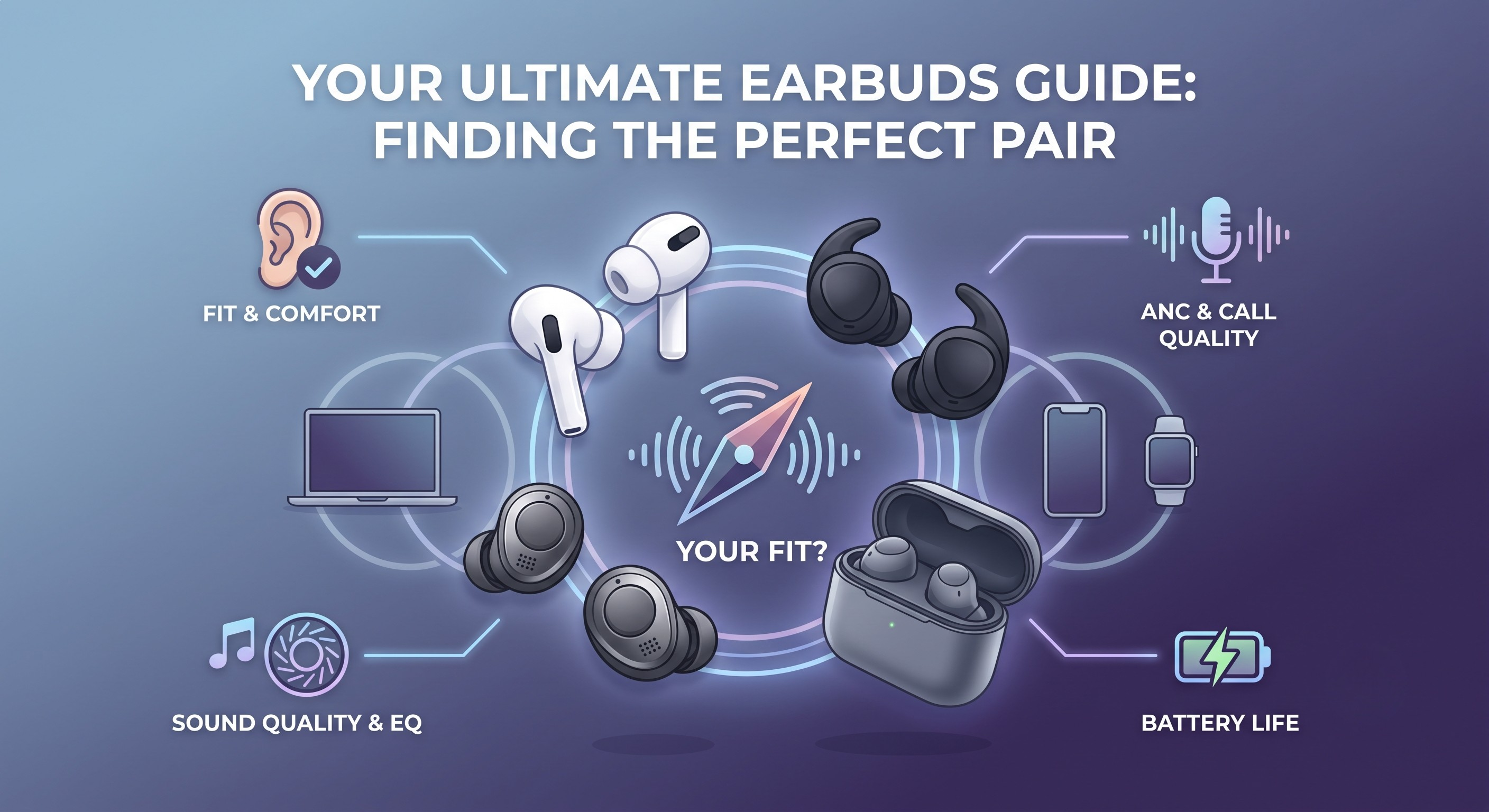
Today? You are faced with active noise cancellation (ANC), spatial audio, custom EQ profiles, IP ratings, and Bluetooth codecs. It’s easy to feel like you need an engineering degree just to listen to a podcast.
The truth is, there is no single "best" pair of earbuds on the market—there is only the best pair for your specific routine. Whether you are dodging noise on a noisy commute, pushing through workout sets, or sitting in back-to-back Zoom meetings, here is how to narrow down your search and buy with confidence.
1. Identify Your Primary "Use Case"
Before looking at specs or prices, ask yourself one question: Where will these spend 80% of their life?
| If you are a... | Prioritize these features |
|---|---|
| Commuter / Traveler | High-end Active Noise Cancellation (ANC), Transparency mode, and long battery life. |
| Fitness Enthusiast | Sweat/water resistance (IPX5 or higher), secure fit (wingtips/ear hooks), and tactile button controls. |
| Remote Worker | Multiple beamforming microphones, Environmental Noise Cancellation (ENC) for voice clarity, and Multipoint connectivity. |
| Audiophile / Casual Music Listener | Custom EQ settings in-app, larger drivers, and higher-bitrate codec support (LDAC, aptX, or AAC). |
2. Fit and Form Factor: Comfort Trumps Specs
It doesn't matter if an earbud features studio-grade sound quality; if it hurts your ears after 20 minutes, you won't use it.
Earbuds generally fall into three design categories:
In-Ear (Silicone/Foam Tips): These seal inside your ear canal. They provide the best passive noise isolation and punchiest bass response, but some people dislike the "plugged" feeling.
- Open-Fit / Semi-In-Ear: Similar to classic AirPods, these rest in the outer ear without creating a deep seal. They are exceptionally comfortable for all-day wear and let you stay aware of your environment, but they bleed sound and sacrifice deep bass.
- Open-Ear / Bone Conduction: These sit entirely outside the ear canal (often wrapping around the ear). They are ideal for outdoor runners and cyclists who need 100% situational awareness for safety.
Pro Tip on Sound Quality: If you go with in-ear tips, test every tip size included in the box. A poor seal lets bass leak out and ruins both active noise cancellation and overall audio warmth.