
Open-Ear vs. In-Ear Earbuds: Which is Right for Your Lifestyle?
In-ear earbuds use silicone tips to create a physical seal inside the ear canal. Open-ear earbuds sit outside the ear canal (using air or bone conduction), leaving it completely uncovered.
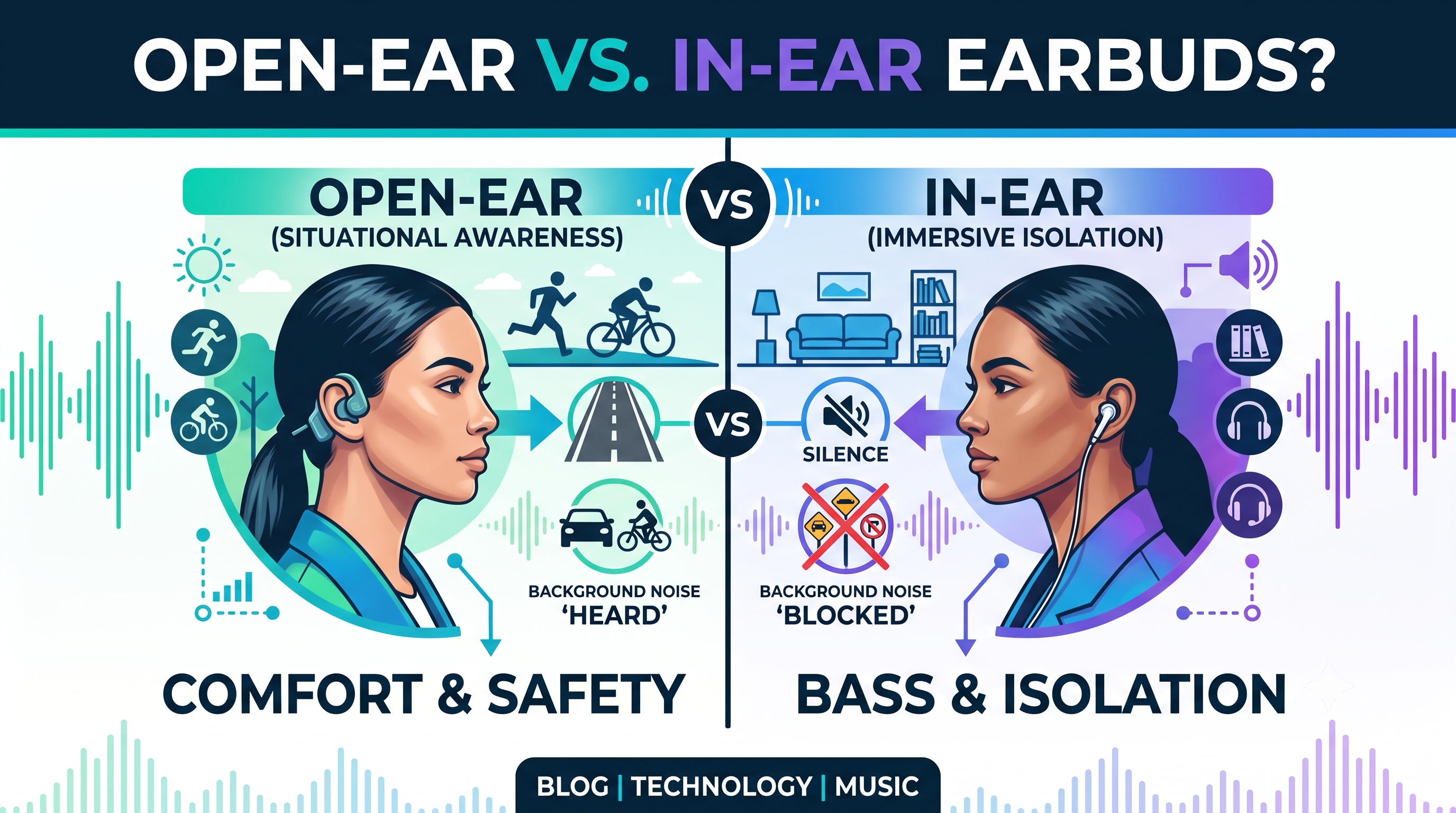
For years, the formula for wireless earbuds was simple: shove a silicone tip directly into your ear canal to seal out the world. It maximized bass, blocked ambient noise, and became the industry standard.
But a massive shift is happening in personal audio. Open-ear headphones—which leave your ear canal completely uncovered—are surging in popularity.
If you are looking for a new pair of daily drivers, you now face a fundamental choice: do you want the immersive isolation of traditional in-ear earbuds, or the situational awareness of open-ear audio? Let’s break down how they work, how they affect your music, and which one fits your routine.
In-Ear Earbuds: The Traditional Powerhouses
In-ear monitors (IEMs) or standard earbuds use soft silicone or foam tips to create a physical seal inside your ear canal.
The Sonic Advantage
This physical seal is crucial for high-fidelity audio. By sealing the ear canal, in-ear buds trap air pressure, allowing them to deliver deep, hard-hitting bass and a rich soundstage. Furthermore, this seal provides passive noise isolation. When you add Active Noise Cancellation (ANC) into the mix, in-ear buds can effortlessly silence a crowded train or a noisy office.
The Trade-Offs
Ear Fatigue: Jamming something into your ear canal for four hours straight can cause physical discomfort or pressure buildup.
Safety Concerns: If you run outdoors or walk through busy city streets, blocking out 100% of your surroundings can be dangerous.
The "Thumping" Effect: Because your ears are sealed, every step you take while running or every time you chew food can echo loudly in your head (known as the occlusion effect).
Open-Ear Earbuds: The New Frontier
Open-ear earbuds don't go inside your ear. Instead, they sit just outside the ear canal, hanging over your ear hook or clipping onto your cartilage. They deliver sound using one of two methods: Air Conduction (highly directional miniature speakers aimed right at your ear canal) or Bone Conduction (vibrations sent through your cheekbones directly to your inner ear).
The Lifestyle Advantage
The biggest selling point here is total situational awareness. You can listen to a podcast or playlist while clearly hearing an approaching car, a cyclist ringing their bell, or a coworker asking a question. Because nothing enters the ear canal, they are incredibly comfortable, eliminate ear sweat during workouts, and cause zero inner-ear fatigue.
The Trade-Offs
- Loss of Low-End Bass: Because sound waves are traveling through open air to reach your ear, sub-bass frequencies naturally dissipate. If you are a hip-hop or EDM fanatic who loves skull-shaking bass, open-ear audio will feel thin.
- Zero Isolation: If you get on a flight with open-ear headphones, the roar of the jet engine will easily overpower your music.
- Sound Leakage: At maximum volume, people sitting right next to you in a quiet library might catch a faint whisper of what you’re listening to.
The Verdict: Which Should You Choose?
Choose In-Ear Earbuds If:
- You are a frequent traveler who needs to block out engine roar or transit noise.
- Audio quality and deep, punchy bass are your top priorities.
- You use your earbuds primarily for focused work, study sessions, or deep music listening.
Choose Open-Ear Earbuds If:
- You are an outdoor runner, cyclist, or walker who needs to stay safe and aware of traffic.
- You experience physical discomfort, itching, or pain from standard silicone ear tips.
- You work in an environment where you need to listen to music but remain reachable by family or colleagues.