
The Silent Hero of Clear Calls: What is ENC in Earbuds?
Have you ever stepped outside to take an urgent work call, only for the person on the other end to ask, "Are you standing next to a jet engine?" Between traffic hum, wind, and background chatter, keeping a conversation clear on the go used to be a nightmare. Enter ENC (Environmental Noise Cancellation)—the unsung audio feature that ensures you’re heard, no matter how chaotic your surroundings are.
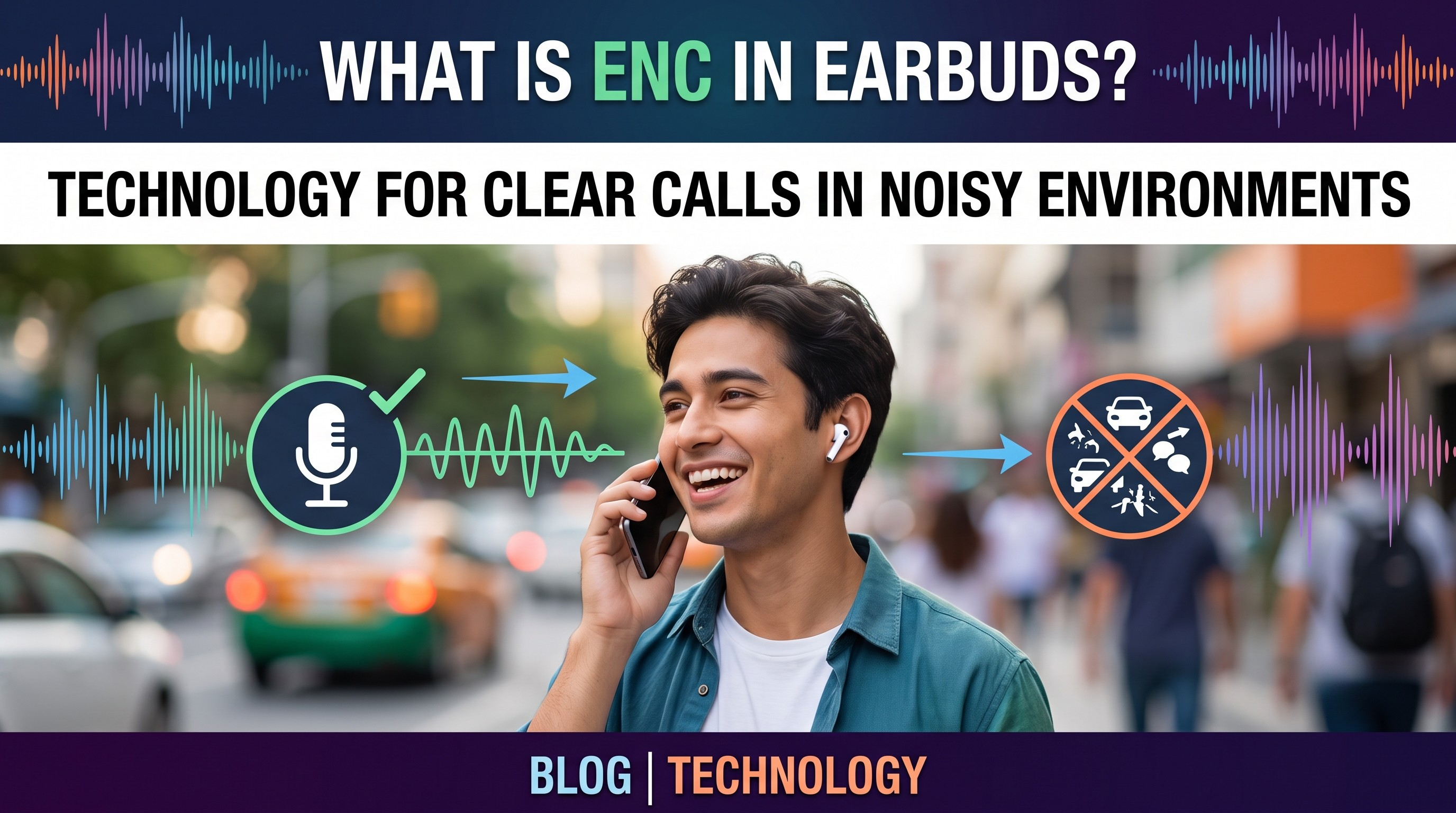
Have you ever stepped outside to take an urgent work call, only for the person on the other end to ask, "Are you standing next to a jet engine?"
Between traffic hum, wind, and background chatter, keeping a conversation clear on the go used to be a nightmare. Enter ENC (Environmental Noise Cancellation)—the unsung audio feature that ensures you’re heard, no matter how chaotic your surroundings are.
If you’ve been browsing for new wireless earbuds, you’ve likely seen the terms ENC and ANC thrown around like interchangeable buzzwords. But they do completely different things. Let’s break down exactly what ENC is, how it works, and why it's a non-negotiable feature for calls.
What Actually is ENC?
ENC stands for Environmental Noise Cancellation. While it sounds like something designed to give you peace and quiet, its true purpose is entirely unselfish: ENC cleans up your voice for the person you are speaking to.
If you are walking past a construction site or working in a noisy coffee shop, you will still hear the ambient chaos. However, the person on the other end of your phone call or Zoom meeting will only hear your crisp, isolated voice.
How Environmental Noise Cancellation Works
The magic of ENC relies on teamwork between built-in hardware (microphones) and intelligent software (digital signal processing).
Most modern wireless earbuds feature at least two microphones per side (often called a Dual-Mic or Quad-Mic setup). Here is the step-by-step physics behind a call powered by ENC:
- The Voice Mic: One microphone sits closer to your mouth to pick up the audio frequencies of your speech.
- The Ambient Mic: A secondary microphone faces outward, specifically scanning the environment to capture surrounding noises like wind, honking cars, or loud office fans.
- The Phase Inversion: The earbud’s internal processor compares both audio signals. Using smart algorithms, it generates an inverted sound wave (an "anti-noise" wave) that matches the exact frequency of the background noise.
- The Safe Output: The inverse wave cancels out the environmental noise, cleanly slicing it away from your voice before transmitting the final audio to your caller.
Many premium earbuds now utilize AI-ENC, which trains algorithmic neural networks to instantly differentiate between human speech and random ambient interference for even faster, sharper isolation.
ENC vs. ANC: A Quick Sidebar
Still confused about the difference? Think of them as two sides of the noise-canceling coin:
| Feature | ENC (Environmental Noise Cancellation) | ANC (Active Noise Cancellation) |
|---|---|---|
| Primary Goal | Clear, professional voice calls | Immersive, distraction-free listening |
| Direction | Outgoing audio (what the mic sends) | Incoming audio (what your ears hear) |
| Best For | Virtual meetings, outdoor calls, gaming chats | Commutes, flights, deep-focus work sessions |
| Battery Impact | Highly efficient; consumes very little power | Noticeable power draw when activated |